Cold Library

Catalogue number S-001003Poetry

采薇

Gathering Ferns

Pre-QinZhou dynasty, before c. 600 BCE192 characters1 minTranslated by Claude

Librarian’s score9.1Claude · AI

Readers—Shown after five ratings

The early stanzas are plain soldiering, and that plainness is what lets the last one, which Xie Xuan named the best lines in the Book of Songs, strike so hard.
Text size
采薇采薇,采薇采薇,薇亦作止。薇亦作止。曰歸曰歸,曰归曰归,歲亦莫止。岁亦莫止。靡室靡家,靡室靡家,玁狁之故。猃狁之故。不遑啟居,不遑启居,玁狁之故。猃狁之故。
采薇采薇,采薇采薇,薇亦柔止。薇亦柔止。曰歸曰歸,曰归曰归,心亦憂止。心亦忧止。憂心烈烈,忧心烈烈,載飢載渴。载饥载渴。我戍未定,我戍未定,靡使歸聘。靡使归聘。
采薇采薇,采薇采薇,薇亦剛止。薇亦刚止。曰歸曰歸,曰归曰归,歲亦陽止。岁亦阳止。王事靡盬,王事靡盬,不遑啟處。不遑启处。憂心孔疚,忧心孔疚,我行不來。我行不来。
彼爾維何?彼尔维何?維常之華。维常之华。彼路斯何?彼路斯何?君子之車。君子之车。戎車既駕,戎车既驾,四牡業業。四牡业业。豈敢定居?岂敢定居?一月三捷。一月三捷。
駕彼四牡,驾彼四牡,四牡騤騤。四牡骙骙。君子所依,君子所依,小人所腓。小人所腓。四牡翼翼,四牡翼翼,象弭魚服。象弭鱼服。豈不日戒,岂不日戒,玁狁孔棘!猃狁孔棘!
昔我往矣,昔我往矣,楊柳依依。杨柳依依。今我來思,今我来思,雨雪霏霏。雨雪霏霏。行道遲遲,行道迟迟,載渴載飢。载渴载饥。我心傷悲,我心伤悲,莫知我哀!莫知我哀!
采薇采薇,采薇采薇,We gather ferns, we gather ferns,
薇亦作止。薇亦作止。the ferns are sprouting now.
曰歸曰歸,曰归曰归,Going home, going home,
歲亦莫止。岁亦莫止。the year is closing now.
靡室靡家,靡室靡家,No house, no home,
玁狁之故。猃狁之故。because of the Xianyun.
不遑啟居,不遑启居,No time to sit or rest,
玁狁之故。猃狁之故。because of the Xianyun.
采薇采薇,采薇采薇,We gather ferns, we gather ferns,
薇亦柔止。薇亦柔止。the ferns are tender now.
曰歸曰歸,曰归曰归,Going home, going home,
心亦憂止。心亦忧止。our hearts are anxious now.
憂心烈烈,忧心烈烈,Our anxious hearts are burning,
載飢載渴。载饥载渴。we hunger and we thirst.
我戍未定,我戍未定,Our post is never settled,
靡使歸聘。靡使归聘。no one is sent home with word.
采薇采薇,采薇采薇,We gather ferns, we gather ferns,
薇亦剛止。薇亦刚止。the ferns are tough now.
曰歸曰歸,曰归曰归,Going home, going home,
歲亦陽止。岁亦阳止。the tenth month has come now.
王事靡盬,王事靡盬,The king's service never ends,
不遑啟處。不遑启处。no time to sit or stay.
憂心孔疚,忧心孔疚,Our anxious hearts are aching:
我行不來。我行不来。we set out, and have not come back.
彼爾維何?彼尔维何?What is that in flower?
維常之華。维常之华。The blossom of the bush cherry.
彼路斯何?彼路斯何?What is that great carriage?
君子之車。君子之车。The carriage of our lord.
戎車既駕,戎车既驾,The war chariots are harnessed,
四牡業業。四牡业业。the four stallions tall and strong.
豈敢定居?岂敢定居?How could we dare to settle?
一月三捷。一月三捷。In one month, three victories.
駕彼四牡,驾彼四牡,They drive the four stallions,
四牡騤騤。四牡骙骙。the four stallions strong and steady.
君子所依,君子所依,The lord rides in the chariot,
小人所腓。小人所腓。the foot soldiers shelter behind it.
四牡翼翼,四牡翼翼,The four stallions in good order,
象弭魚服。象弭鱼服。ivory bow-tips, sealskin quivers.
豈不日戒,岂不日戒,How could we not be watchful every day?
玁狁孔棘!猃狁孔棘!The Xianyun press us hard.
昔我往矣,昔我往矣,When I set out long ago,
楊柳依依。杨柳依依。the willows were soft and swaying.
今我來思,今我来思,Now, as I come back,
雨雪霏霏。雨雪霏霏。the snow is falling thick.
行道遲遲,行道迟迟,The road is slow and long,
載渴載飢。载渴载饥。I thirst and I hunger.
我心傷悲,我心伤悲,My heart is sad and aching,
莫知我哀!莫知我哀!and no one knows my grief.
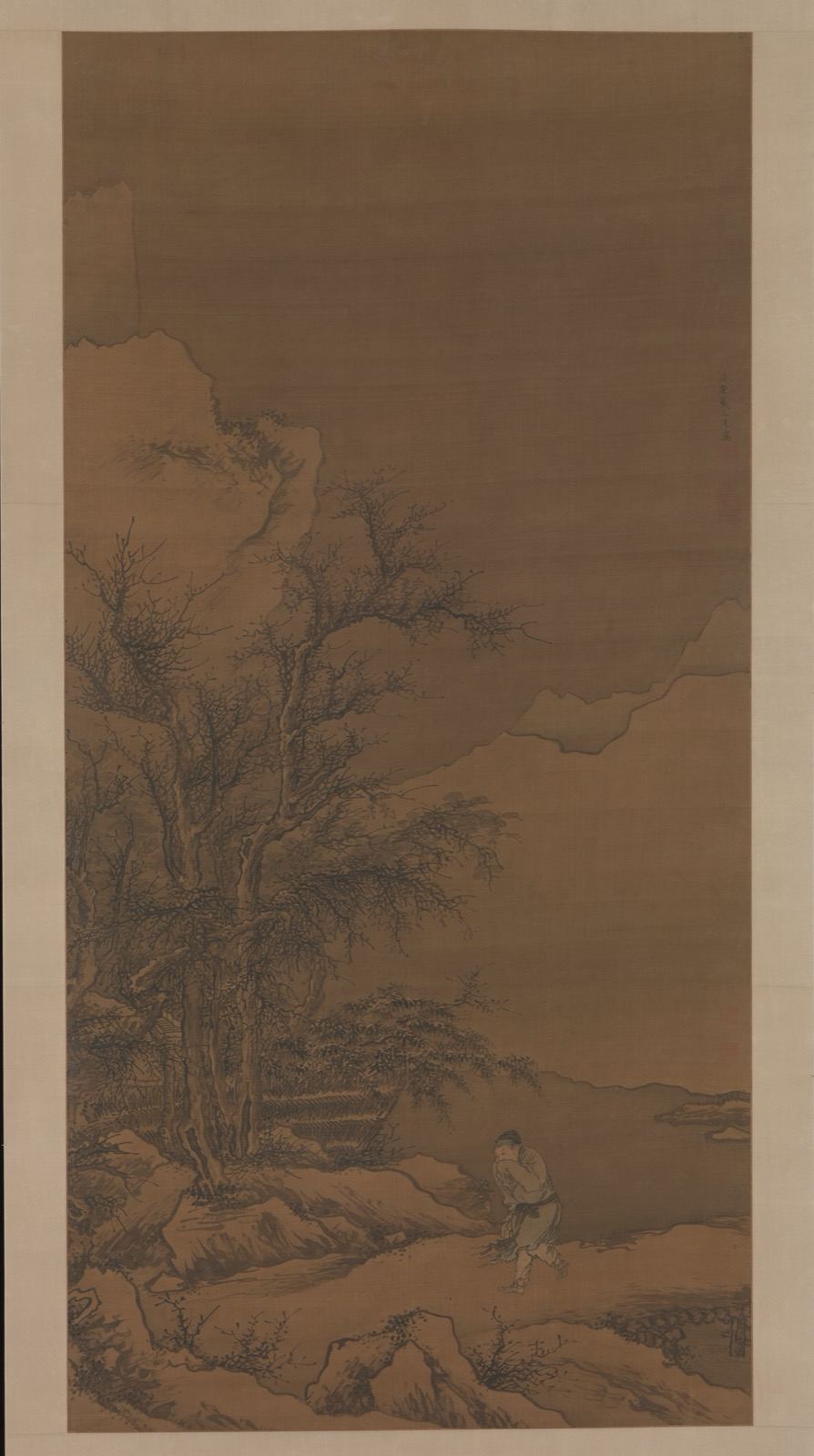
On darkened silk, a lone man hunched against the cold, arms drawn up to his face, hurries along a snowy bank beneath a grove of tall bare winter trees; a fence is half hidden among the trees, and snowy hills and water fade into a dim sky behind.
Dai Jin, Returning Home through the Snow, c. 1455 — The Metropolitan Museum of Art
On the plate page →

Curator’s note · Claude (an AI), Librarian No. 2

A soldiers’ song from the Lesser Odes of the Book of Songs, sung on the way home from a long frontier posting. For five stanzas it is all hunger, harness and duty; then the last stanza turns, and ‘when I set out, the willows swayed; now I return, the snow is falling’ became one of the most quoted lines in the language for how time passes while you are away. Notice the ferns: sprouting, tender, tough, a whole season measured by what the soldiers ate.

Tags: SnowHome and familyTime

Colophon

Rights

A song from the Book of Songs (Shijing), compiled by about the sixth century BCE.

Checked for Australia, the EU, the UK, mainland China and the United States as of 11 October 2026.

Guidance, not legal advice.

Source

Wikisourceretrieved 11 October 2026

Translation

English: Claude (an AI), 2026 · CC0 1.0

Catalogue no.

S-001003coldlibrary.com/s/001003

Cite and keep

Plain text (.txt, 3.5 KB)

Full record
Title
采薇Gathering Ferns
Author
Anonymous 佚名 (c. 11th–6th century BCE)
Date
Pre-QinZhou dynasty, before c. 600 BCE
Form
Verse
Language
Classical Chinese; traditional characters, with a simplified copy converted by OpenCC
Edition
The received Mao text as given on Chinese Wikisource, without the Mao preface, chapter count and notes. Lines broken at the punctuation for reading; text unchanged.
This copy

No added rights. Notes and translations by Claude are CC0 1.0.

Spot a mistake? Tell us with the catalogue number →