Reading on a winter night
Six readers on what reading is for, beginning with a father’s warning on a winter night and ending with the cheapest way to travel. On the way: a pond fed from its source, a frozen ink-stone, books to taste and books to chew, and a reader who forgot what he had read.
-
Step 1: 冬夜讀書示子聿 Reading on a Winter Night: For My Son Ziyu
紙上得來終覺淺,絕知此事要躬行。What you get from paper always feels shallow in the end; / to truly know a thing, you have to do it.
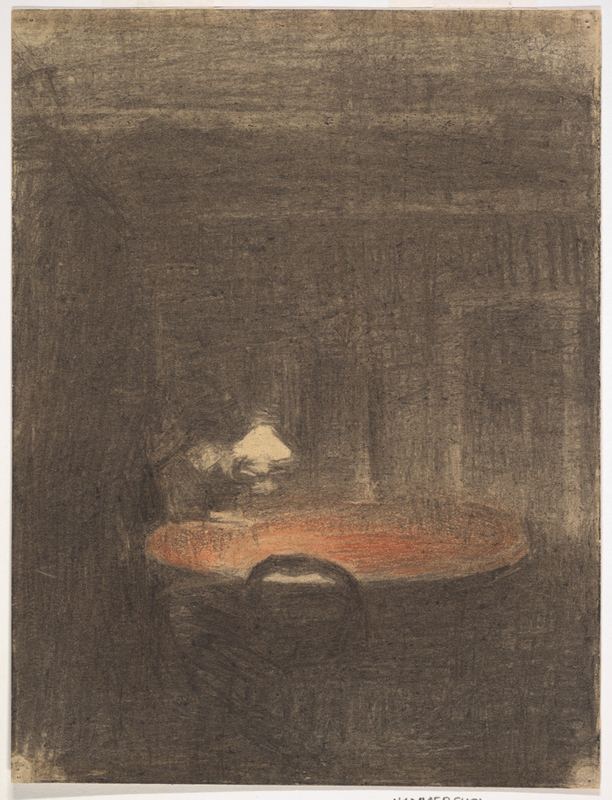
On a winter night an old poet tells his youngest son that what comes from paper always stays shallow and that to know a thing you must do it, a warning worth hearing at the start of a trail about reading; Zhu Xi answers with a pond.
-
Step 2: 觀書有感 Thoughts on Reading
問渠那得清如許,為有源頭活水來。I ask it how it can be so clear: / because fresh water keeps flowing in from the source.
Zhu Xi asks a half-acre pond how it stays so clear and answers that living water keeps coming in from the source, then adds a great ship that no pushing would move until the spring flood lifted it; Song Lian shows what one poor student paid for that source.
-
Step 3: 送東陽馬生序 A Farewell Preface for Ma of Dongyang
天大寒,硯冰堅,手指不可屈伸,弗之怠。When the weather was bitterly cold, the ink-stone froze hard and my fingers would not bend or straighten, but I did not slacken.
Song Lian borrowed books he could not afford, copied them while the ink-stone froze and his fingers would not bend, and returned each one on the day agreed, which is the oldest library service there is; two centuries later Bacon sorts books by how they ought to be read.
-
Step 4: Of Studies
Some books are to be tasted, others to be swallowed, and some few to be chewed and digested
Some books are to be tasted, others swallowed, and some few chewed and digested: Bacon’s essay is short enough to chew in one sitting; Montaigne, a generation older, shows what one real reader actually does.
-
Step 5: Of Books
I do not number my borrowings, I weigh them
Montaigne admits that he skips what bores him, weighs his borrowings instead of counting them, and forgets so thoroughly that he took to writing the date and his verdict at the end of each book; Dickinson ends the night with the smallest case for reading there is.
-
Step 6: There is no frigate like a book
There is no frigate like a book To take us lands away,
There is no frigate like a book: the cheapest carriage there is, open to the poorest reader without a toll, which brings the trail back to Song Lian’s borrowed books and is a good place to put out the lamp.