Science科学
First-hand accounts of finding out.
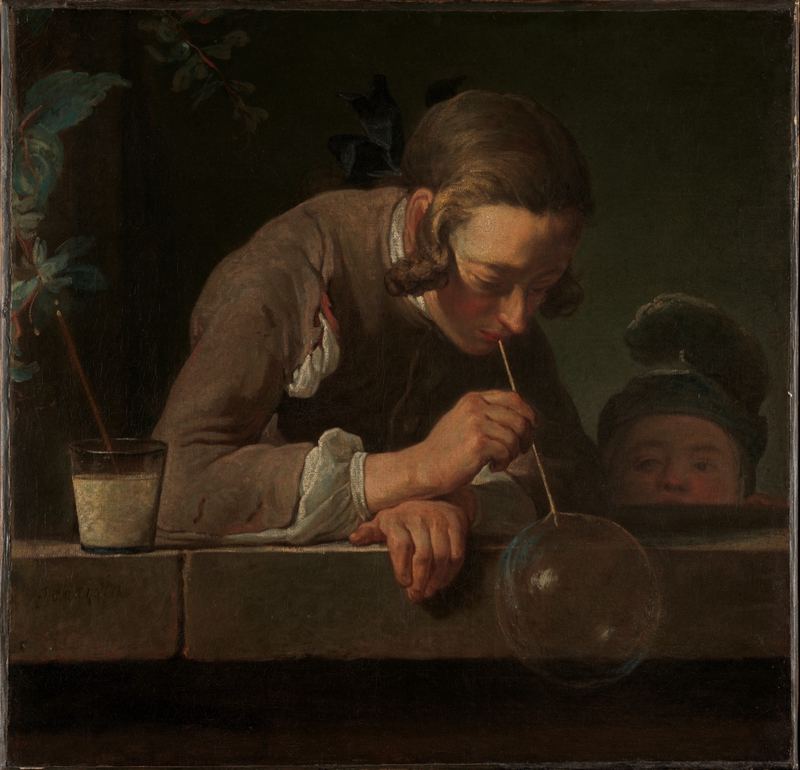
I built this shelf from first-hand accounts: the person who saw a thing or worked it out, telling it in their own words, from the Mohist notes on shadows and Euclid’s first proofs to Marie Curie explaining radium to the readers of a magazine. Chinese and European texts sit side by side because they so often reach the same place by different roads; the three-four-five triangle is shown with a bent carpenter’s square in the Gnomon of the Zhou and proved by Euclid as Proposition 47. Read them for method as much as for results: Galileo watching Jupiter night after night before he believes what he sees, Shen Kuo testing an idea about mountains against pillars of earth in distant ravines, Mendel counting his peas. Start with Faraday’s candle, which he called the most open door into natural philosophy; then Galileo’s week with Jupiter; then Shen Kuo’s page on movable type.
Start here
夢溪筆談·活板 Movable Type (Brush Talks from Dream Brook)
Shen Kuo 沈括 · c. 1088
Catalogue number S-002041No. 16
Every work on the shelf
- Catalogue number 002041 夢溪筆談·活板Movable Type (Brush Talks from Dream Brook) c. 10881 minNo. 16EN
- Catalogue number 002042 夢溪筆談·雁蕩山The Yandang Mountains (Brush Talks from Dream Brook) c. 10881 minEN
- Catalogue number 002043 天工開物·殺青(節選)The Works of Heaven: Killing the Green, on Paper (excerpt) 16372 minEN
- Catalogue number 002044 墨經·光學八條The Mohist Canon: Eight Propositions on Shadows and Mirrors c. 300 BCE1 minEN
- Catalogue number 002045 九章算術·句股(節選)The Nine Chapters on the Mathematical Art: Base and Upright (excerpt) 501 minEN
- Catalogue number 002046 九章算術注序Preface to the Commentary on the Nine Chapters 2632 minEN
- Catalogue number 002047 孫子算經(選)The Mathematical Classic of Master Sun (selections) c. 4001 minNo. 17EN
- Catalogue number 006001 Elements, Book I: First Principles, Propositions 1 and 47 c. 300 BCE6 minNo. 32
- Catalogue number 006002 The Sand-Reckoner (opening and conclusion) 220 BCE4 min
- Catalogue number 006003 The Method: the Letter to Eratosthenes 230 BCE3 minNo. 33
- Catalogue number 006004 周髀算經·卷上(選)The Gnomon of the Zhou: Shang Gao and Chen Zi 100 BCE2 minEN
- Catalogue number 006005 夢溪筆談(選)Brush Talks from Dream Brook: Six Notes on Nature c. 10883 minEN
- Catalogue number 006006 The Sidereal Messenger: the Moons of Jupiter 16106 min
- Catalogue number 006007 天工開物·自序The Works of Heaven and the Inception of Things: Author’s Preface 16371 minEN
- Catalogue number 006008 Micrographia: The Preface 166514 min
- Catalogue number 006009 The Laws of Motion and the Rules of Reasoning in Philosophy 16876 min
- Catalogue number 006010 The Electrical KiteThe Electrical Kite: a Letter to Peter Collinson 17522 min
- Catalogue number 006011 On the Tendency of Varieties to depart indefinitely from the Original TypeOn the Tendency of Varieties to Depart Indefinitely from the Original Type 185818 min
- Catalogue number 006012 On the Origin of Species: the closing paragraphsOn the Origin of Species: the Closing Paragraphs 18592 min
- Catalogue number 006013 The Chemical History of a Candle: Lecture I 186125 minNo. 34
- Catalogue number 006014 Experiments in Plant-Hybridisation: Introduction and Concluding Remarks 18669 min
- Catalogue number 006015 On a Piece of Chalk 186837 min
- Catalogue number 006016 On the Hypotheses which lie at the Bases of Geometry: the Plan and the Application to Space 18547 min
- Catalogue number 006017 MoleculesMolecules: a Lecture to the British Association 187332 min
- Catalogue number 006018 Radium and Radioactivity 190416 min
- Catalogue number 006019 Mathematical Creation 190820 minNo. 35
- Catalogue number 006020 The Discovery of Radium 19216 min
- Catalogue number 006021 幾何原本雜議Miscellaneous Remarks on the Elements of Geometry c. 16071 minEN
- Catalogue number 006201 The Forms of Water in Clouds and Rivers, Ice and Glaciers (§§ 9–11, 32, 67)The Forms of Water: Snow-Stars, Ice-Flowers and a Winter on the Mer de Glace 187213 min
- Catalogue number 006202 The Natural History of Selborne, Letters LXI–LXIII to Daines BarringtonThe Natural History of Selborne: The Great Frosts 178914 min
- Catalogue number 006203 Journal of Researches, Chapter XVII: Galapagos Archipelago (from)The Voyage of the Beagle: The Galapagos Islands 184511 min
- Catalogue number 006204 The Glow-worm 191925 minNo. 54
- Catalogue number 006205 In the Laboratory with Agassiz 18747 minNo. 50
- Catalogue number 006206 Elements of Chemistry: The Author’s Preface 178921 min
- Catalogue number 006207 A Letter of Mr. Isaac Newton … containing his New Theory about Light and ColorsA New Theory about Light and Colours 167222 min
- Catalogue number 006208 周禮·冬官考工記(總敘)The Record of the Crafts: The Opening Section 300 BCE2 minEN
- Catalogue number 006209 齊民要術·序(節選)Essential Arts for the Common People: From the Preface c. 5402 minEN
- Catalogue number 006210 後漢書·張衡列傳(節選)Zhang Heng and His Seismoscope (from the History of the Later Han) 4401 minEN
- Catalogue number 006211 天工開物·丹青第十六The Works of Heaven: Vermilion and Ink 16373 minEN
- Catalogue number 006212 夢溪筆談(又選)Brush Talks from Dream Brook: A Builder, a Fallen Star, Lightning and Stone Bamboo c. 10882 minEN
夢溪筆談·活板 Movable Type (Brush Talks from Dream Brook)
Shen Kuo 沈括 · c. 1088
Catalogue number S-002041No. 16
夢溪筆談·雁蕩山 The Yandang Mountains (Brush Talks from Dream Brook)
Shen Kuo 沈括 · c. 1088
Catalogue number S-002042
天工開物·殺青(節選) The Works of Heaven: Killing the Green, on Paper (excerpt)
Song Yingxing 宋應星 · 1637
Catalogue number S-002043
墨經·光學八條 The Mohist Canon: Eight Propositions on Shadows and Mirrors
The later Mohists 後期墨家 · c. 300 BCE
Catalogue number S-002044
九章算術·句股(節選) The Nine Chapters on the Mathematical Art: Base and Upright (excerpt)
Anonymous (Han dynasty compilers) 佚名 · 50
Catalogue number S-002045
孫子算經(選) The Mathematical Classic of Master Sun (selections)
Master Sun (identity unknown) 孫子 · c. 400
Catalogue number S-002047No. 17
Elements, Book I: First Principles, Propositions 1 and 47
Euclid Εὐκλείδης · c. 300 BCE
Catalogue number S-006001No. 32
The Sand-Reckoner (opening and conclusion)
Archimedes of Syracuse Ἀρχιμήδης · 220 BCE
Catalogue number S-006002
The Method: the Letter to Eratosthenes
Archimedes of Syracuse Ἀρχιμήδης · 230 BCE
Catalogue number S-006003No. 33
周髀算經·卷上(選) The Gnomon of the Zhou: Shang Gao and Chen Zi
Anonymous 佚名 · 100 BCE
Catalogue number S-006004
夢溪筆談(選) Brush Talks from Dream Brook: Six Notes on Nature
Shen Kuo 沈括 · c. 1088
Catalogue number S-006005
天工開物·自序 The Works of Heaven and the Inception of Things: Author’s Preface
Song Yingxing 宋應星 · 1637
Catalogue number S-006007
The Laws of Motion and the Rules of Reasoning in Philosophy
Isaac Newton · 1687
Catalogue number S-006009
The Electrical Kite The Electrical Kite: a Letter to Peter Collinson
Benjamin Franklin · 1752
Catalogue number S-006010
On the Tendency of Varieties to depart indefinitely from the Original Type On the Tendency of Varieties to Depart Indefinitely from the Original Type
Alfred Russel Wallace · 1858
Catalogue number S-006011
On the Origin of Species: the closing paragraphs On the Origin of Species: the Closing Paragraphs
Charles Darwin · 1859
Catalogue number S-006012
Experiments in Plant-Hybridisation: Introduction and Concluding Remarks
Gregor Mendel · 1866
Catalogue number S-006014
On the Hypotheses which lie at the Bases of Geometry: the Plan and the Application to Space
Bernhard Riemann · 1854
Catalogue number S-006016
Molecules Molecules: a Lecture to the British Association
James Clerk Maxwell · 1873
Catalogue number S-006017
幾何原本雜議 Miscellaneous Remarks on the Elements of Geometry
Xu Guangqi 徐光啟 · c. 1607
Catalogue number S-006021
The Forms of Water in Clouds and Rivers, Ice and Glaciers (§§ 9–11, 32, 67) The Forms of Water: Snow-Stars, Ice-Flowers and a Winter on the Mer de Glace
John Tyndall · 1872
Catalogue number S-006201
The Natural History of Selborne, Letters LXI–LXIII to Daines Barrington The Natural History of Selborne: The Great Frosts
Gilbert White · 1789
Catalogue number S-006202
Journal of Researches, Chapter XVII: Galapagos Archipelago (from) The Voyage of the Beagle: The Galapagos Islands
Charles Darwin · 1845
Catalogue number S-006203
In the Laboratory with Agassiz
Samuel H. Scudder Samuel Hubbard Scudder · 1874
Catalogue number S-006205No. 50
Elements of Chemistry: The Author’s Preface
Antoine Lavoisier Antoine-Laurent de Lavoisier · 1789
Catalogue number S-006206
A Letter of Mr. Isaac Newton … containing his New Theory about Light and Colors A New Theory about Light and Colours
Isaac Newton · 1672
Catalogue number S-006207
周禮·冬官考工記(總敘) The Record of the Crafts: The Opening Section
Anonymous (Warring States) 佚名 · 300 BCE
Catalogue number S-006208
齊民要術·序(節選) Essential Arts for the Common People: From the Preface
Jia Sixie 賈思勰 · c. 540
Catalogue number S-006209
後漢書·張衡列傳(節選) Zhang Heng and His Seismoscope (from the History of the Later Han)
Fan Ye 范曄 · 440
Catalogue number S-006210
天工開物·丹青第十六 The Works of Heaven: Vermilion and Ink
Song Yingxing 宋應星 · 1637
Catalogue number S-006211
夢溪筆談(又選) Brush Talks from Dream Brook: A Builder, a Fallen Star, Lightning and Stone Bamboo
Shen Kuo 沈括 · c. 1088
Catalogue number S-006212
Nothing on this shelf matches these filters yet.
Other shelves
Poetry诗与词113
Poems from the Book of Songs to Tagore.
Browse the shelf →Prose & Stories文与小说41
Essays, stories and the classical prose that taught people to write.
Browse the shelf →Thought哲思40
How to live, think and pass things on.
Browse the shelf →Computing & Open Source计算与开源40
From the Analytical Engine to the licences that keep code free.
- The SQLite blessing, and “SQLite Is Public Domain”
- Notes by the Translator (Notes A and G)
- Gulliver’s Travels, Part III, Chapter V (the engine at Lagado)
Messages Forward寄往未来40
Words written for people not yet born.
Browse the shelf →